Posts

20 Years on from 9/11
Image
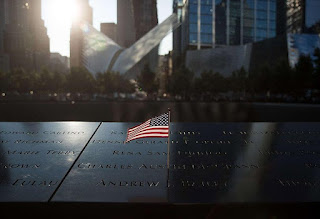
On September 11 th 2001, the world stopped and turned to their radio or TV to learn of a terrorist attack which shook the foundations of what America held to be true. 19 men, armed only with box cutters, demonstrated to America that it is not untouchable, and new and unknown threats lay just beyond the horizon.   Memorial Site of 9/11   -   Photo Drew Angerer 20 years later, almost to the date, the world once again tuned in to see a nation’s military response, one that has left a path of destruction and bloodshed, come to a confusing and inconclusive end. Much like the film ‘Uncut Gems’, you are left feeling utterly drained and no more informed about the motives than at the start, and with a sense that the last 2 hours, or 20 years, have been for absolutely nothing.   So what has changed in the last 20 years? Technology, for one, has improved exponentially. Not only does this mean a fancy new iPhone for us, but it also means expensive and extravaga...
Challenges to International Law in the 21st Century [4/4]

Image
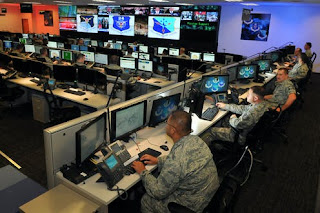
Since the 1940s, States have been guided on what is considered appropriate when faced with threats to international and domestic security. In the 21 st century however, the nature of war has shifted considerably; new threats in the form of non-state actors and advanced technology means state centric laws are no longer as pertinent. This four part blog will discuss the various challenges international law is being faced with following the changes to warfare and security.   Technological advancements have been part of warfare since the invention of the bow and arrow, in the 21st Century however, these changes have now created challenges in the shape of cyber warfare. The strategic threat posed by these new intrusions has resulted in a fundamental shift in the nature of warfare.   U.S Military increasing its cyber capacity The term ‘cyber warfare’ has been used to describe anything ranging from website vandalism to disabling strategic infrastructure. Such a diverse range...

Challenges to International Law in the 21st Century [3/4]

Image
Since the 1940s, States have been guided on what is considered appropriate when faced with threats to international and domestic security. In the 21 st century however, the nature of war has shifted considerably; new threats in the form of non-state actors and advanced technology means state centric laws are no longer as pertinent. This four part blog discusses the various challenges international law is being faced with following the changes to warfare and security. The previous blogs referred to how both new actors in the field of war and asymmetrical warfare have become challenges to the principles of law. This post will look to how it is also the actions of states themselves which have placed a significant strain on international law.   New weapons, particularly drones, have opened up both new avenues of warfare and challenges to international law. States have seized on drones with their radical separation of the body of the fighter and the fight itself; it has become, as ...

Challenges to International Law in the 21st Century [2/4]

Image
Since the 1940s, States have been guided on what is considered appropriate when faced with threats to international and domestic security. In the 21st Century however, the nature of war has shifted considerably; new threats in the form of non-state actors and advanced technology means state centric laws are no longer as pertinent. This four part blog will discuss the various challenges international law is being faed with following the changes to nature and security.  A considerable challenge faced by international law is the one brought by asymmetric warfare. Defined as: “strategies and tactics adopted by a force when military capabilities… are so significantly different that they cannot make the same sorts of attacks on each other,” asymmetrical warfare is the modern style of conflict due to the changing characters of war and state responses. This new style of warfare has only thrown more challenges at the legal principles of war as they now must respond to the question of non...

Challenges to International Law in the 21st Century [1/4]

Image
Since the 1940s, States have been guided on what is considered appropriate when faced with threats to international and domestic security. In the 21st century however, the nature of war has shifted considerably; new threats in the form of non-state actors and advanced technology mean state centric laws are no longer as pertinent. This four part blog will discuss the various challenges international law is being faced with following the changes to warfare and security.  Significant portions of international law developed as a result of WWII and a collective desire to not see a repetition of the atrocities. The new legal order saw the creation of the Charter of United Nations (1945) and the UN Declaration of Human Rights (1948). Reflective of an aspiring liberal global order, these legal principles operate on the basis of reciprocity; “ the most effective guarantee to ensure the application of international law is… the expectation of the subjects of international law that their count...

Predator or Protector?

Image
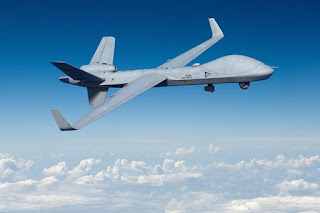
  The UK Ministry of Defence has revealed a new drone which will replace the current fleet of drones and have advanced capabilities, named the ‘Protector’. It is said to “epitomise[s] the second drone age, characterised by a global expansion in both type of drones being used by States and the scale of operations, including domestic sphere.” Given that the ‘Protector’ will carry Brimstone 3 Missiles and Paveway IV (laser guided bombs), the term ‘expansion’ can also be applied the lethality of UK’s drones. U.K's new drone: The Protector The release of these new drones might celebrate a new style of warfare which offers a level of protection for soldiers as the ‘Protector’ will help would allow the “ removal of aircrew from the aircraft, making the cost of intervention a monetary one,without the need to consider the human cost .” The appeal of such weaponry can be great when a war weary public no longer has to see their soldiers put at risk, as the fighter and the fight become ...

Drones: The “Cute” face of Surveillance?

Image
COVID-19 has seen resources mobilized at both a national and international level; from funding medical research to significant emergency restrictions. Technological solutions however, have proved themselves to be essential to combatting and flattening the curve of infections. Drones, as well as other forms of artificial intelligence, have all been implemented to enforce restriction measures and generate data to anticipate further outbreaks. Naturally, this has led to a sense of optimism amongst the public in relation to drone use. They relieve a certain level of stress from emergency services by collecting imagery, delivering food and medicine to the vulnerable, monitor situations and can even disinfect large urban areas – but most importantly, they can do all of these tasks without a generating a further risk of spreading the virus. They hold “ a special appeal in the age of social distancing and viral spread by providingremote, act-at-a distance services .”   An Italian police of...