Posts

"Who do I call if I want to call Europe?"

Image
Thomas Klein-Brockhoff, distinguished scholar for Geostrategy at German Marshall Fund, recently voiced the question of a ‘leaderless Europe’ being the result of the war in Ukraine.  This follows an idea that the countries traditionally considered to be the ‘leaders’ of Europe, notably Germany and France, are no longer in the position to do so and are gradually losing the trust and faith of Eastern Europe. Having war on its doorstep once again has shaken Europe, and it has thrown the Union into limbo. Moving forward, we face the question of who should lead Europe or whether the question should actually be if we need or should have a leader at all?  Following Merkel’s step-down as German Chancellor, many looked to France and President Macron to take the lead. His first term was littered with pro-EU sentiment, but they have not yet been translated into concrete policy success. A vast majority of his policy suggestions have either been ignored or directly disputed by other member...

Biden’s Drone Policy: an Explosive Blast from the Past

Image
President Biden had signed a new drone policy, said to limit counter-terrorism drone strikes which take place outside of conventional war zones. This policy departs from the previously loosened status of the former President Trump’s approach to the War on Terror. The policy codifies the limits that the admin put in place following his inauguration in January 2021. These limits, namely in the form of requiring the CIA and military to obtain White House permission to attack suspected terrorists where there is limited ground troops, have been implemented in the hope of reducing civilian risks.  Overall, this new policy calls for fewer drone strikes and greater consideration for civilians caught in the crossfire. A seemingly hopeful departure from Trump’s “ take out their families ” approach. Although a promising step forward, there are a few things to consider:  Following the aftermath of Trump’s counterterrorism policy, where there was a certain free for all and a sentiment of “...

Monitoring Ukraine

Image
  As the dust settles in certain Ukrainian towns and cities, images of death and destruction are being broadcast to the world, and chants are growing louder for war crimes to be prosecuted.  President Biden has argued the need for one, President Macron has stated that there are clear indications of war crimes and the Human Rights Watch has begun to offer reports on abuse and summary executions. Investigations have begun for legal proceedings to take place.  Just this week, a Russian soldier was tried and convicted for war crimes in Ukraine; a 21 year old tank commander was sentenced to life imprisonment for killing a civilian in Chupakhira on February 28th. As the first sentencing to take place for the war crimes in Ukraine, the conversation has now turned to the topic of a greater war tribunal taking place, in an effort to bring a sense of justice for what has happened over the past few months.  Since the prosecution of Nazi leaders in Nuremberg, war tribunals ha...

Dissertation Abstract

The Distortion of the Principle of Self-Defence - How Obama’s Drone Policy Undermined the International Rule of Law. Weaponised drones became a fundamental feature in Obama’s fight against terrorism. Despite significant push back from international organisations and scholars, who lamented the drones’ widespread and seemingly unchecked use across multiple different states, Obama’s policies and justifications proved that drone strikes, in the name of self-defence, were here to stay. Even with such conviction held by the Obama administration, there are still layers of uncertainty when it comes to questions of the international rule of law.  Modern conflict undoubtedly places a level of pressure on international law when seeking to offer guidance on the appropriate course of action in conflict. A balance however, must be struck between accepting modern tactics and technology, and respecting the traditional rule of law – put in place to keep a measure on violence. Obama howeve...

A Question of Civilian Casualties

Image
The U.S withdrawal from Afghanistan was said to have been the end of America’s fight in the Middle East. As with many endings however, no matter how unclear or dramatic, there always comes a need for reflection and a moment to assess where those involved fell short. America's use of drones are no exception to this. Air Force technicians prepare a MQ-9 Reaper for flight When a state engages in drone warfare, it opens a family sized can of worms relating to problems of international law and waging a just war. Another problem to consider however, is the question of civilian casualties. Drones hold the allure of removing boots on the ground in the immediate moment; thereby creating a safer and more remote war. When you remove in-person involvement however, and wage your war from behind a screen, the ability to assess and accurately identify who is a threat is minimised. Pentagon documents , obtained through the Freedom of Information Act, revealed that drone strikes conducted in Afgh...

$5 million vs $5: Getting Your Money's Worth

Image
When you create a weapon so efficient and precise that it has been said to put “warheads on foreheads”, it can be expected that it might come back and bite you at some point.   This is exactly the position that America is finding itself in following the proliferation of the use of drones. What used to be an advantage on the side of America – a safer war from the confines of a base on American soil – has now fallen into the hands of insurgent groups.   In an attempt to combat this, the U.S has become to roll out a number of strategies across the multiple military branches in the form of training, tools and sensors to jam or prevent unmanned aerial vehicles. Col. David Morgan, Joint C-sUAS Office Division Chief of Requirements and Capabilities has identified it to be a “systems of systems approach… there is no one silver bullet that is going to address this.”   The introduction of this ‘system of systems’ aims to become a natural part of training so that any war fighter...

20 Years on from 9/11

Image
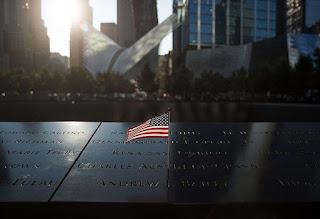
On September 11 th 2001, the world stopped and turned to their radio or TV to learn of a terrorist attack which shook the foundations of what America held to be true. 19 men, armed only with box cutters, demonstrated to America that it is not untouchable, and new and unknown threats lay just beyond the horizon.   Memorial Site of 9/11   -   Photo Drew Angerer 20 years later, almost to the date, the world once again tuned in to see a nation’s military response, one that has left a path of destruction and bloodshed, come to a confusing and inconclusive end. Much like the film ‘Uncut Gems’, you are left feeling utterly drained and no more informed about the motives than at the start, and with a sense that the last 2 hours, or 20 years, have been for absolutely nothing.   So what has changed in the last 20 years? Technology, for one, has improved exponentially. Not only does this mean a fancy new iPhone for us, but it also means expensive and extravaga...

Challenges to International Law in the 21st Century [4/4]

Image
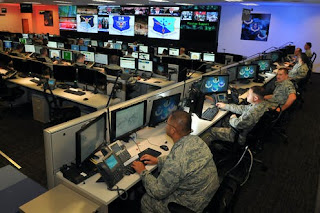
Since the 1940s, States have been guided on what is considered appropriate when faced with threats to international and domestic security. In the 21 st century however, the nature of war has shifted considerably; new threats in the form of non-state actors and advanced technology means state centric laws are no longer as pertinent. This four part blog will discuss the various challenges international law is being faced with following the changes to warfare and security.   Technological advancements have been part of warfare since the invention of the bow and arrow, in the 21st Century however, these changes have now created challenges in the shape of cyber warfare. The strategic threat posed by these new intrusions has resulted in a fundamental shift in the nature of warfare.   U.S Military increasing its cyber capacity The term ‘cyber warfare’ has been used to describe anything ranging from website vandalism to disabling strategic infrastructure. Such a diverse range...

Challenges to International Law in the 21st Century [3/4]

Image
Since the 1940s, States have been guided on what is considered appropriate when faced with threats to international and domestic security. In the 21 st century however, the nature of war has shifted considerably; new threats in the form of non-state actors and advanced technology means state centric laws are no longer as pertinent. This four part blog discusses the various challenges international law is being faced with following the changes to warfare and security. The previous blogs referred to how both new actors in the field of war and asymmetrical warfare have become challenges to the principles of law. This post will look to how it is also the actions of states themselves which have placed a significant strain on international law.   New weapons, particularly drones, have opened up both new avenues of warfare and challenges to international law. States have seized on drones with their radical separation of the body of the fighter and the fight itself; it has become, as ...

Challenges to International Law in the 21st Century [2/4]

Image
Since the 1940s, States have been guided on what is considered appropriate when faced with threats to international and domestic security. In the 21st Century however, the nature of war has shifted considerably; new threats in the form of non-state actors and advanced technology means state centric laws are no longer as pertinent. This four part blog will discuss the various challenges international law is being faed with following the changes to nature and security.  A considerable challenge faced by international law is the one brought by asymmetric warfare. Defined as: “strategies and tactics adopted by a force when military capabilities… are so significantly different that they cannot make the same sorts of attacks on each other,” asymmetrical warfare is the modern style of conflict due to the changing characters of war and state responses. This new style of warfare has only thrown more challenges at the legal principles of war as they now must respond to the question of non...

Challenges to International Law in the 21st Century [1/4]

Image
Since the 1940s, States have been guided on what is considered appropriate when faced with threats to international and domestic security. In the 21st century however, the nature of war has shifted considerably; new threats in the form of non-state actors and advanced technology mean state centric laws are no longer as pertinent. This four part blog will discuss the various challenges international law is being faced with following the changes to warfare and security.  Significant portions of international law developed as a result of WWII and a collective desire to not see a repetition of the atrocities. The new legal order saw the creation of the Charter of United Nations (1945) and the UN Declaration of Human Rights (1948). Reflective of an aspiring liberal global order, these legal principles operate on the basis of reciprocity; “ the most effective guarantee to ensure the application of international law is… the expectation of the subjects of international law that their count...

Predator or Protector?

Image
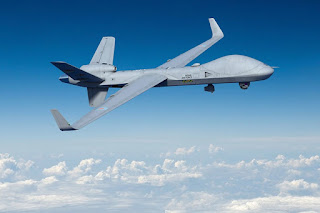
  The UK Ministry of Defence has revealed a new drone which will replace the current fleet of drones and have advanced capabilities, named the ‘Protector’. It is said to “epitomise[s] the second drone age, characterised by a global expansion in both type of drones being used by States and the scale of operations, including domestic sphere.” Given that the ‘Protector’ will carry Brimstone 3 Missiles and Paveway IV (laser guided bombs), the term ‘expansion’ can also be applied the lethality of UK’s drones. U.K's new drone: The Protector The release of these new drones might celebrate a new style of warfare which offers a level of protection for soldiers as the ‘Protector’ will help would allow the “ removal of aircrew from the aircraft, making the cost of intervention a monetary one,without the need to consider the human cost .” The appeal of such weaponry can be great when a war weary public no longer has to see their soldiers put at risk, as the fighter and the fight become ...

Drones: The “Cute” face of Surveillance?

Image
COVID-19 has seen resources mobilized at both a national and international level; from funding medical research to significant emergency restrictions. Technological solutions however, have proved themselves to be essential to combatting and flattening the curve of infections. Drones, as well as other forms of artificial intelligence, have all been implemented to enforce restriction measures and generate data to anticipate further outbreaks. Naturally, this has led to a sense of optimism amongst the public in relation to drone use. They relieve a certain level of stress from emergency services by collecting imagery, delivering food and medicine to the vulnerable, monitor situations and can even disinfect large urban areas – but most importantly, they can do all of these tasks without a generating a further risk of spreading the virus. They hold “ a special appeal in the age of social distancing and viral spread by providingremote, act-at-a distance services .”   An Italian police of...